The makam and darüşşifa tradition: what is known?
A traditional or spiritual practice, not a scientific claim.
Session · Makam · Rast · 12 min
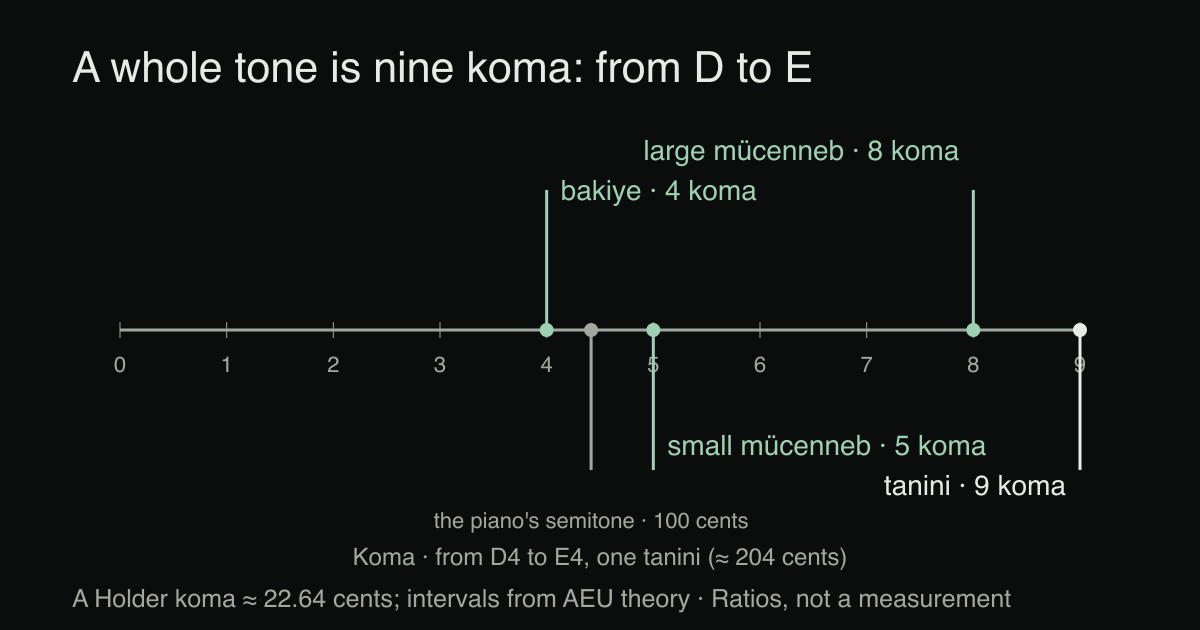
What is a makam?
In Turkish music, a makam is a system that describes a melodic scale together with how to move through it (seyir), where to come to rest (karar) and which pitch to emphasise (güçlü). The twelve modes of Safi al-Din al-Urmawi in the 13th century are an early systematisation of this tradition; in that system the twelve modes were matched to the twelve zodiac signs and the four branches to the four elements.
Ottoman sources
The link between makam and body is said to go back to al-Farabi. Ottoman physicians such as Şuuri Hasan Efendi and Gevrekzade Hasan Efendi wrote works on the effects of makams on emotions. According to Adnan Çoban, a psychiatrist and performer of classical Turkish music, this information has not gone beyond being historical knowledge.
The Bayezid II Darüşşifa in Edirne
The darüşşifa (hospital) of the Bayezid II Complex in Edirne is remembered for experimental practices such as music and occupation alongside the traditional medicine of the period. Since 1997 the building has been Trakya University's museum of medicine and health. The primary source for the popular stories about which makam was played at which hour is not given in this short note.
Where things stand today
There is no controlled research showing a specific effect of makams. Studies of music in general for sleep and relaxation are a separate matter and are not specific to makam. The makam sessions in Frekans Studio offer no sema, hymn or worship content; they are a secular practice of listening and learning.
What does the evidence say?
The makam tradition and moods
A makam is a melodic system of Turkish music; its effect on mood is a historical account, not a scientific claim.
What don't we know? These mappings are historical accounts: with no research showing their validity and reliability, they have no clinical value today.
Findings and sources
Evidence levels and sources come from the database; the article adds no new claims. Evidence methodology
Studies
| Work | Type | n | Finding | Level |
|---|---|---|---|---|
| Kıranlar 2017[2] | Review | — | A short note on the silhouette of the Bayezid II Darüşşifa in the Trakya University medical journal's logo. It notes that the hospital offered "experimental practices" such as music and occupation alongside the traditional medicine of the period, and that the building has presented this past as a medicine and health museum since 1997. | T |
| Çoban 2012[1] | Review | — | The author, a psychiatrist and performer of classical Turkish music, reports that the link between makam and body is said to go back to al-Farabi and that Ottoman physicians such as Şuuri Hasan Efendi and Gevrekzade Hasan Efendi wrote about the effects of makams on emotions. In his view this remains historical information: with no research showing its validity and reliability, it has no clinical value today. | T |
| Özkan 2003[3] | Institutional page | — | Entry "Makam": Safi al-Din al-Urmawi's Kitab al-Adwar describes twelve modes (uşşak, neva, buselik, rast, ırak, ısfahan, zirefkend, büzürg, zengule, rahevi, hüseyni, hicazi); in this system the twelve modes were matched to the twelve zodiac signs and the four branches to the four elements. | T |
Frequently asked questions
- Which makam is good for which mood?
- Ottoman sources contain such mappings, but they are historical accounts and have not been scientifically tested. Whether you like a makam also depends on your culture, habits and taste.
- Can you visit the Darüşşifa?
- The building in Edirne is today a museum of medicine and health under Trakya University. Check the museum's own announcements for opening hours.
Who is it for?
For whom
- Anyone looking for sound for relaxation, focus or a sleep routine; the sounds are generated on your device and promise no effect.
- Anyone who wants to read the evidence level of what they listen to.
- Anyone curious about the historical accounts of makam music; the darüşşifa records describe a historical practice, not a health claim carried into the present.
- Anyone trying it as a listening ritual, with no expectation of an effect.
Not for whom
- If you have epilepsy or a history of seizures, a psychiatric diagnosis, a medical device such as a pacemaker, tinnitus or any other health condition, or if you are pregnant, consult your doctor before use.
- Do not listen while driving or operating machinery.
- Keep your device volume comfortable, preferably below 60%. You can also use your device's headphone-safety settings.
Frekans Studio is not a medical device; it does not diagnose, treat or prevent any disease.
Listen and try
Makam · Rast
Sources
- Çoban A. Hoş sedanın gücü: Müzikoterapi. SD dergisi. 2012(22):68-71.
- Kıranlar Ö, Koçak Z. A Short Note About the Reconsideration of the Image of Bayezid II Darüşşifa. Balkan Med J. 2017;34(3):187. doi:10.4274/balkanmedj.2017.3.0001 PMID 28559219
- Özkan İH. Makam. TDV İslâm Ansiklopedisi; 2003.
Citations come from the evidence database; every source is verified with Crossref or PubMed. Links go to the publication's own page (DOI).
Where to go next
Method
- Sources
- Scientific statements rest on 1 claims in the evidence database; each claim's sources and review note are on its own page: The makam tradition and moods
- Editorial responsibility
- Murat Tunalı · Editorial responsibility lies with Murat Tunalı; no independent medical review has been carried out.
- How this article was prepared
- The first draft was prepared by an AI model (Claude); the article adds no new figures, citations or claims, and the evidence summary comes from the database. Murat Tunalı approved publication. No independent scientific adviser has reviewed it yet. Evidence methodology · Credits
- Limitations
- This article is for information only; it is not medical advice. Evidence levels are per claim; a session's level is the weakest of its linked claims.
- Updates
- Last updated: 3 October 2026
- Cite as
- Frekans Studio. “The makam and darüşşifa tradition: what is known?”. Last updated: 3 October 2026. https://frekans.studio/en/guide/makam-and-darussifa-tradition